For many years, Traffic Rules in Canada were checked mainly by traffic police and if someone jumped a signal or drove too fast then a police officer stopped the vehicle and gave a ticket by hand. Slowly, cameras were added at signals and busy roads to help police to keep roads safe. Now, Canada is entering a new phase where technology helps officers. People are hearing about AI Cameras on roads and these cameras are said to be smart and can watch traffic without a police officer. Because of this many people believe that manual traffic tickets are slowly coming to an end.

Goodbye To Manual Traffic Tickets In Canada
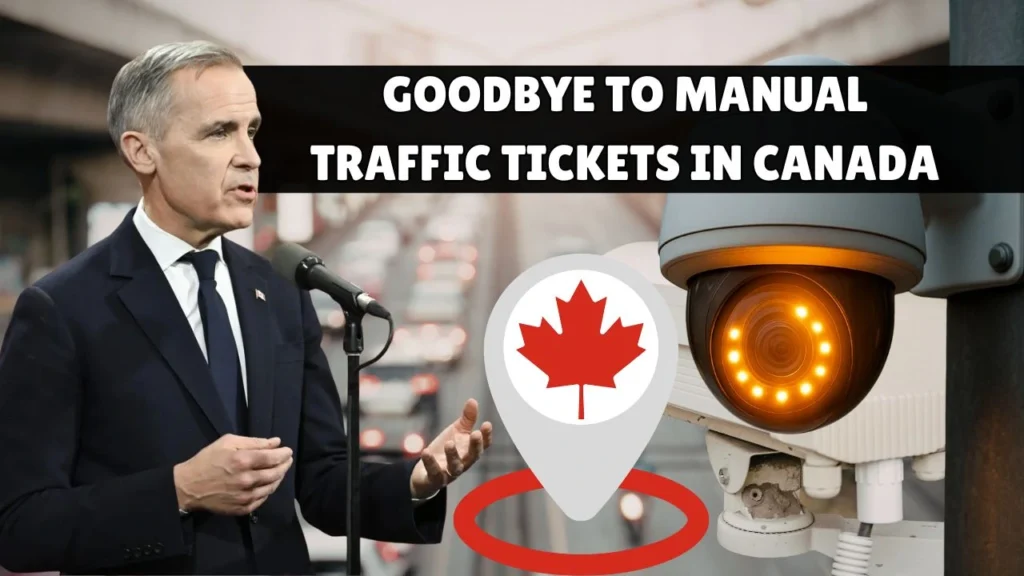
In Canada, each province has its own traffic rules and guidelines. Some of the provinces in Canada are using AI Cameras to detect whether residents are following traffic rules or not. These AI Cameras use computer technology to understand traffic movement. These cameras can detect overspeeding, automatic seat belt detection and driver’s behaviour. The Canadian Government is trying to reduce accidents, save lives and make roads safer for all whether its children, seniors, cyclists and even drivers.
AI Cameras In Canada – Overview
| Post Title | Goodbye To Manual Traffic Tickets In Canada |
| Country Name | Canada |
| What’s Changing | Manual Traffic Ticketing |
| New Technology | AI Cameras |
| Current Status | Being tested in some provinces |
| Helpful in | Automatic detection of seatbelts, overspeeding and behaviour of driver |
| Post Category | Canada News |
What Are AI Powered Security Cameras?
AI Cameras are smart cameras that use computer programs to understand what is happening on the road. These cameras do more than just taking pictures. They can notice traffic movement, crowded areas and unsafe driving patterns. In Canada, these cameras are still new. Not every province is using them and these cameras are generally under testing. These cameras are not meant to replace police officers but they can help to understand road problems better. AI Cameras can provide better road safety and it also reduces burden on police. There are faster responses and it also collects data for when traffic is high and low. These cameras can work all the time. Many people in Canada are worried about smart cameras. People are worried about:

- Privacy issues
- Fear of unfair fines
- Mistakes by cameras
- Lack of human judgement
Will Manual Traffic Tickets End in Canada?
In the era of technology and AI Cameras, Manual tickets might be lowered but these are not ending for all time. Police officers are still needed to stop dangerous drivers and to handle drunk driving cases. Police officers manage traffic during emergencies which AI Cameras can’t do and human judgement can make fair decisions on the spot. AI Cameras can’t fully replace human judgement.
How AI Cameras Help To Improve Road Safety?
AI Cameras do not just watch drivers. But they also help to understand how roads are being used. By watching traffic movement, cities can see where vehicles slow down, where people cross roads often and where accidents happen again and again. These cameras also support police work. Instead of standing on one road all day, police officers can focus on serious problems like dangerous driving or emergencies.
FAQs Related To Goodbye To Manual Traffic Tickets In Canada
Do AI Cameras give tickets everywhere in Canada?
No, In many provinces or cities, these AI Cameras are used only for safety and planning.

Can AI Cameras replace traffic police?
No, AI Cameras can’t replace traffic police. Police officers are still needed for fair decisions or emergencies.
Do AI Cameras work all the time?
Yes, AI Cameras can work day and night even in low light or bad weather.

Is Manual Ticketing in Canada ending?
No, Manual Ticketing in Canada is not ending forever. Police officers still give tickets by hand when traffic rules are broken.
Can police warn drivers instead of giving tickets?
Yes, Police officers can warn drivers when needed instead of giving tickets.
How AI Cameras can help to manage traffic in Canada?
AI Cameras can help cities to manage traffic by watching how vehicles move and by doing this officers can get to know where traffic is heavy and where roads get blocked often.